Hot smoked and cold smoked salmon are two different foods that share a name. Hot smoking runs at 120F to 180F, which cooks the fish: it turns opaque, firms up and flakes, and it is what most American recipes mean by smoked salmon. Cold smoking happens below about 80F, which cooks nothing at all. The fish stays translucent, silky and raw in texture, and it is the salt cure rather than any heat that has made it safe and shelf stable.
That is why the long recipes on this page are long. A cold smoke sits in the temperature range bacteria like best, so the cure has to do the preserving by pulling water out of the flesh before the fish ever meets smoke. The forty four hour recipe below is not being fussy; the cure time is the safety margin. Do not shorten a cure, do not improvise the salt ratio, and if you are feeding anyone pregnant, very young, elderly or immunocompromised, serve the hot smoked versions instead. Nine recipes here, from ten minutes to forty four hours.
Hot Smoked Salmon
Three cooked by the smoke, at 120F to 180F, and all three want the same finish: pull the fish at an internal temperature of around 135F to 140F. Salmon is lean and it goes from silky to chalky across about ten degrees, and a smoker is slow enough that you have time to check.
Pellet Grill Smoked Salmon
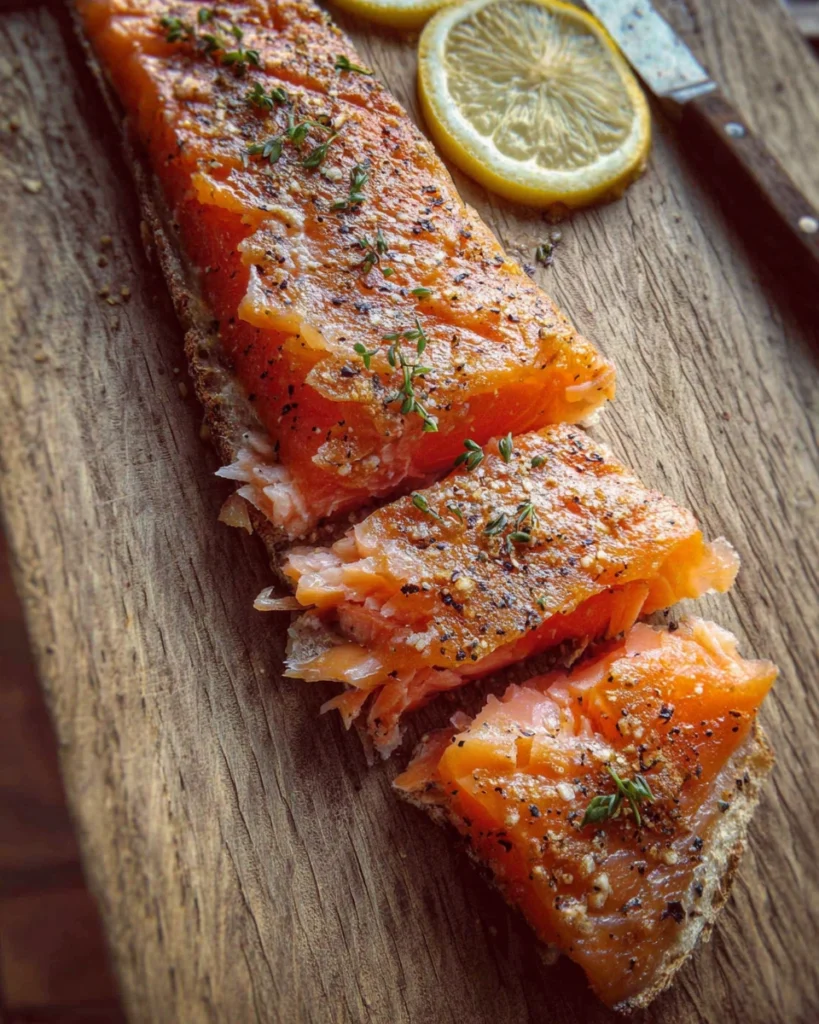
Eight ingredients in seventy five minutes, the quickest in this group by a wide margin, at 288 calories, also the lightest. A pellet grill holds a low temperature steadily, which is the hard part of smoking on a kettle. View the full recipe — 75 minutes, serves 4, 288 calories
Soy Wine Smoked Salmon Brine
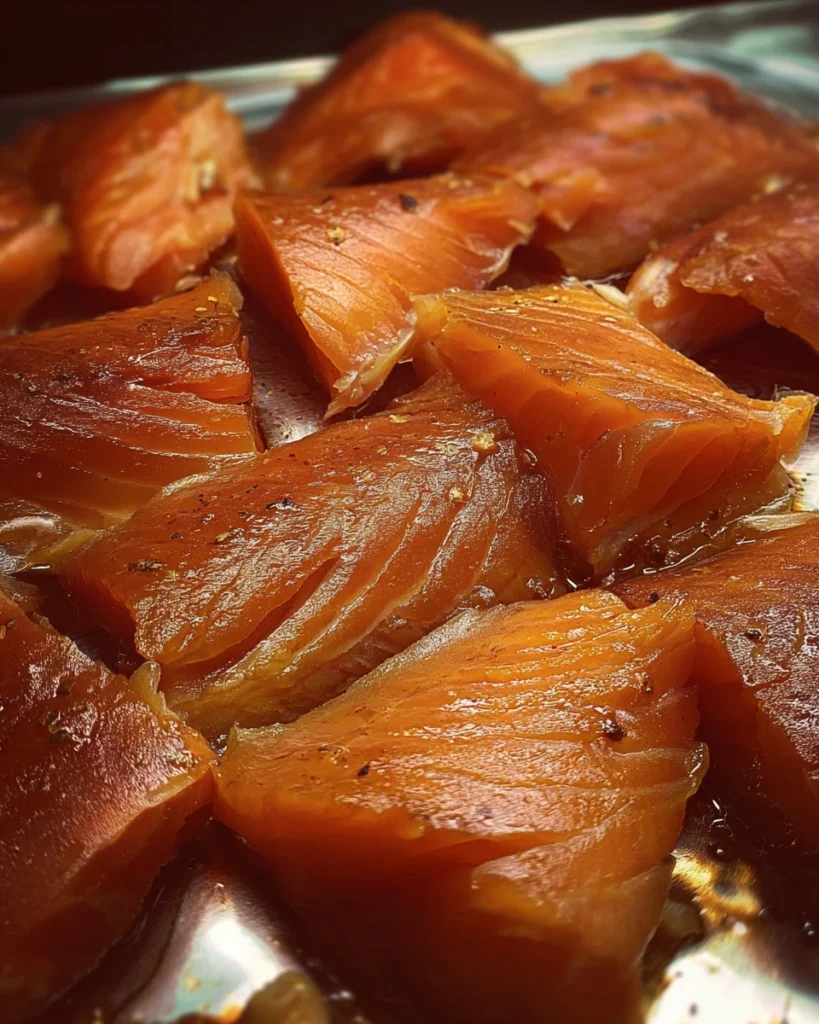
Eight ingredients over four hours fifteen at 420 calories. A wet brine rather than a dry cure, which seasons faster and preserves less, so this is a hot smoke only method. View the full recipe — 255 minutes, serves 4, 420 calories
Low and Slow Smoked Salmon
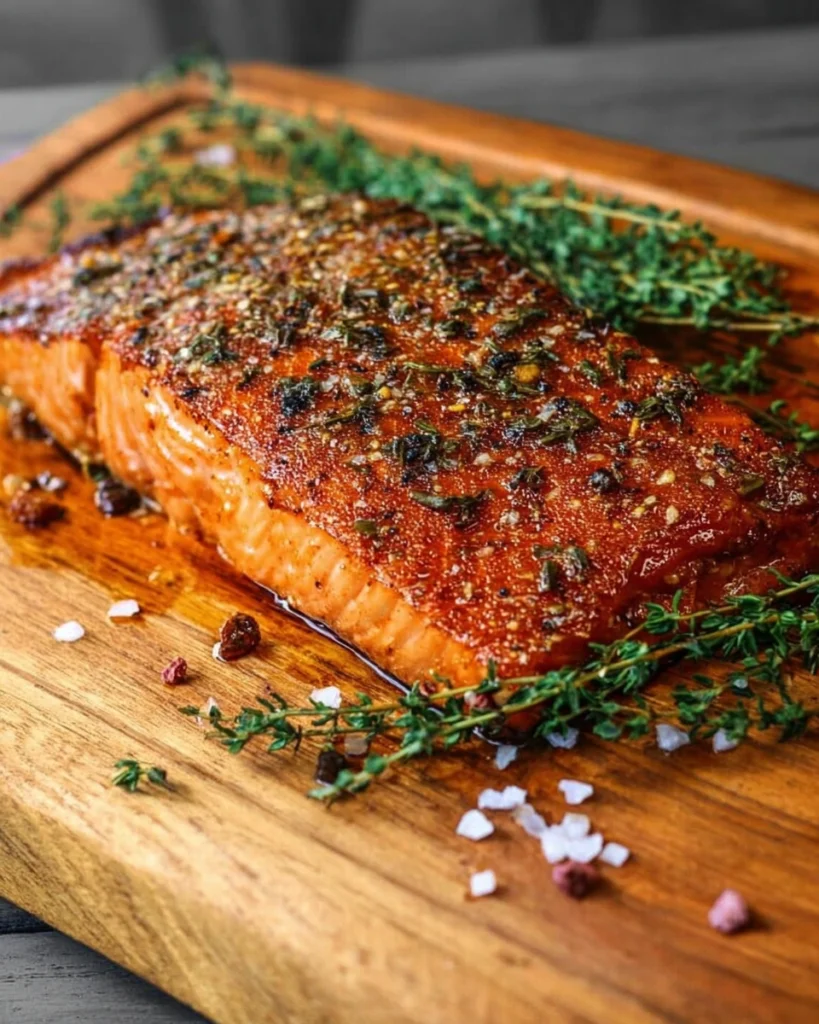
Seven ingredients, the fewest in this group, over twelve hours, the longest here, at 440 calories, the heaviest of the three. View the full recipe — 720 minutes, serves 4, 440 calories
Cured and Cold Smoked
Three where the cure is doing the work. Salt draws water out of the flesh by osmosis, which both firms the texture and lowers the water activity enough that bacteria cannot multiply. A dry cure is usually salt and sugar in a ratio somewhere around two or three to one, packed on and left for hours under weight, then rinsed and dried. The ratios in these recipes are not suggestions.
Brined Smoked Salmon
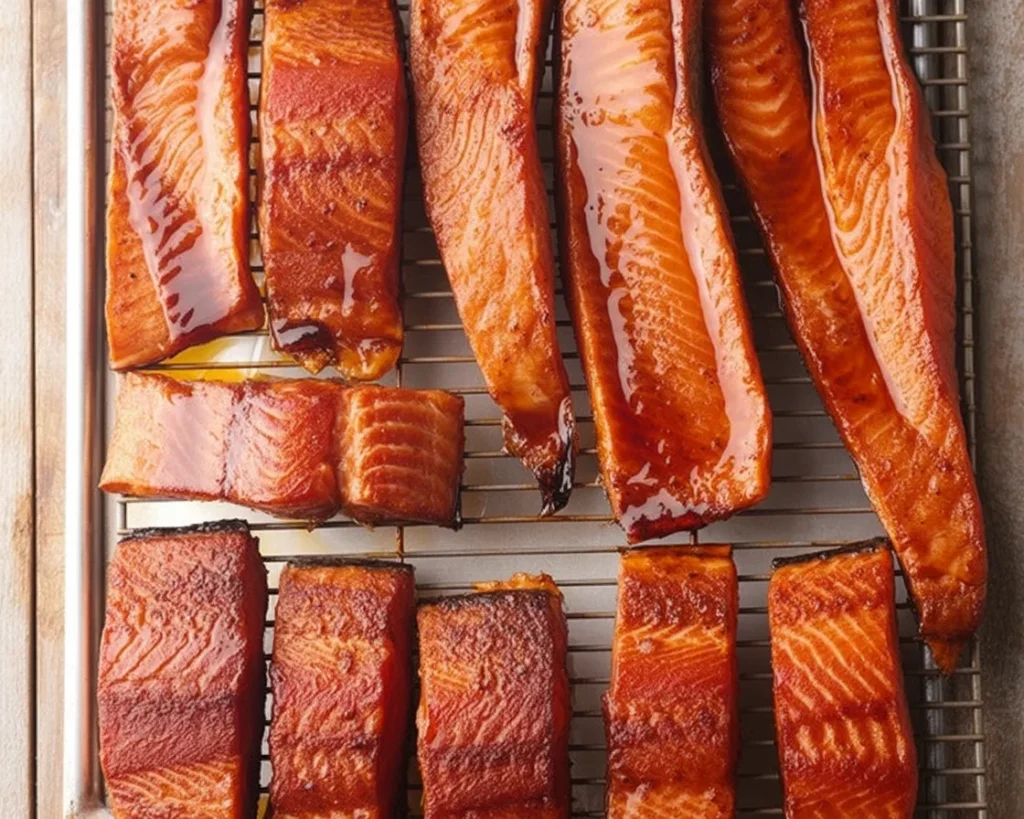
Five ingredients, the fewest in this group, over seven hours fifty at 204 calories, the lightest in this group. View the full recipe — 470 minutes, serves 4, 204 calories
Dill Lemon Smoked Salmon

Ten ingredients, the most in this group, over seven hours, the quickest in this group, six servings at 272 calories. Dill and lemon is the gravlax tradition, where salt, sugar and herbs cure the fish with no smoke at all. View the full recipe — 420 minutes, serves 6, 272 calories
Maple Cured Smoked Salmon
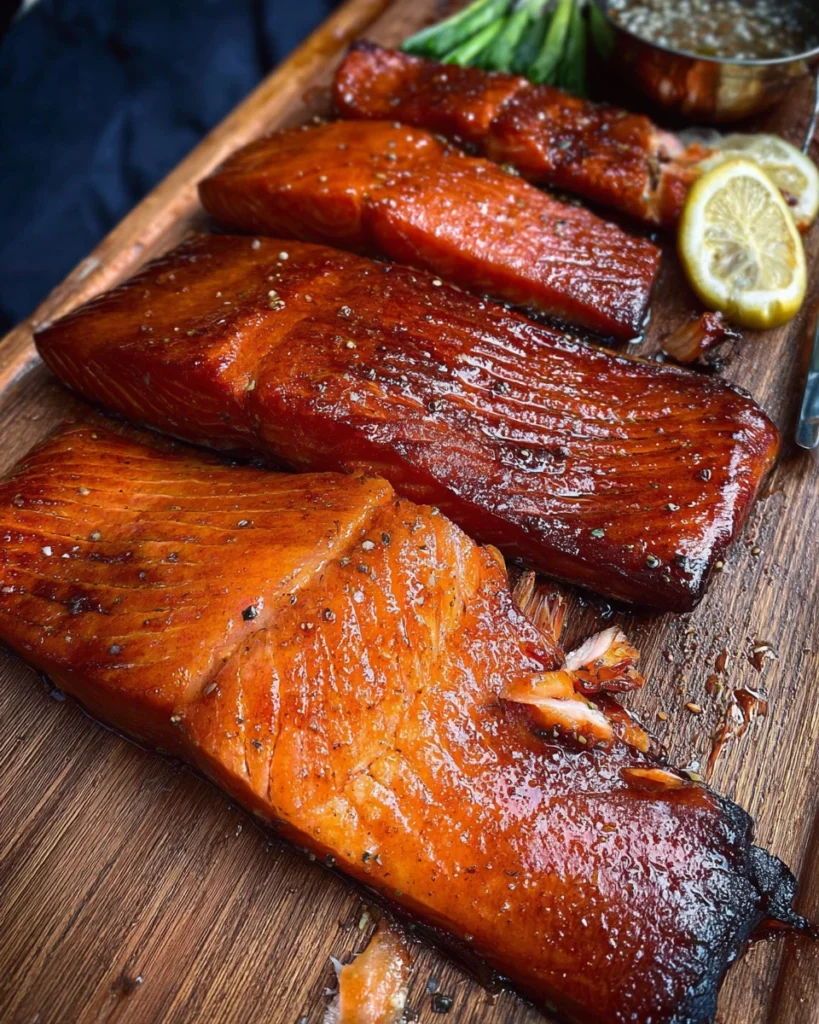
Six ingredients over fourteen hours at 434 calories, the heaviest in this group. Maple in a cure is more than flavour: sugar moderates how aggressively the salt pulls water out, so the texture stays silkier. View the full recipe — 840 minutes, serves 4, 434 calories
The Full Cold Smoke
One recipe, and it is the longest thing on this page by a wide margin because it is the only true cold smoke here. Below 80F nothing is cooked, so every hour of that time is cure and dry and smoke doing a preserving job that heat normally does.
Dry Cured Cold Smoked Salmon

Five ingredients, tied for the shortest list on this page, over forty four hours, the longest recipe here, six servings at 272 calories. Read the whole method before starting; this is the one recipe on the site where the timings are a safety instruction rather than a schedule. View the full recipe — 2640 minutes, serves 6, 272 calories
Using Smoked Salmon
Two that start from smoked salmon rather than making it, and both take fifteen minutes or less. This is where cold smoked salmon belongs: unheated, sliced thin, against fat and acid. Heating it ruins both its texture and the money you spent on it.
Creamy Smoked Salmon Dip with Dill
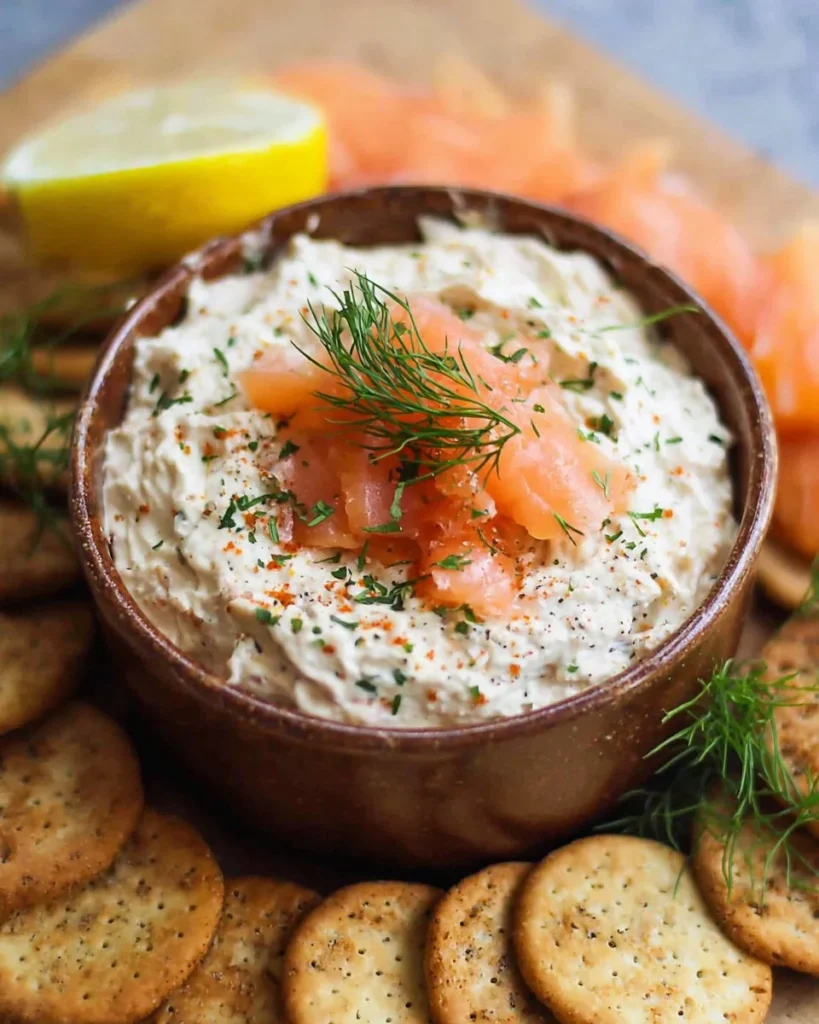
Nine ingredients in ten minutes, the quickest recipe on this page, eight servings at 199 calories, the most portions here. Fold the salmon in last and barely; stirred hard it turns to paste. View the full recipe — 10 minutes, serves 8, 199 calories
Smoked Salmon Avocado Salad
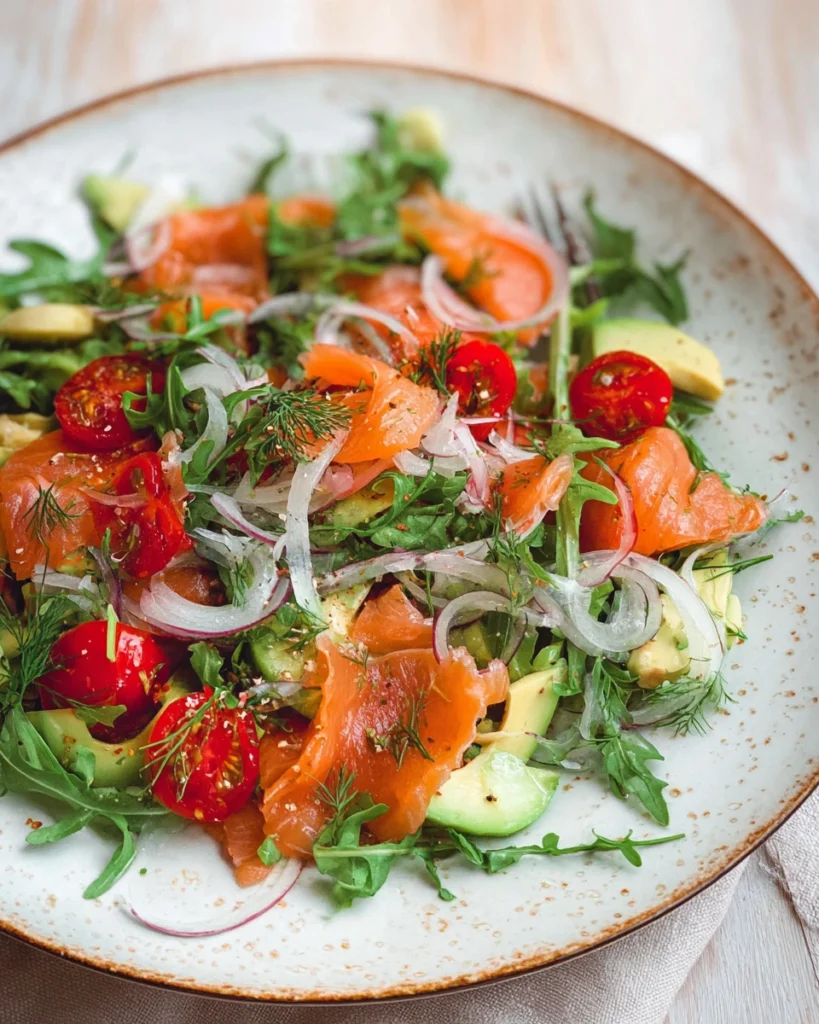
Fourteen ingredients, the longest list on this page, in fifteen minutes, two servings at 531 calories, the heaviest recipe on this page. View the full recipe — 15 minutes, serves 2, 531 calories
Before You Choose Your Recipe
Start with the words, because the labels in a supermarket mean specific things. Lox, strictly, is salmon belly cured in salt brine and never smoked at all. Nova is cold smoked, named for Nova Scotia, and is what most people picture when they say smoked salmon: translucent, silky, sliced paper thin. Gravlax is the Nordic version, cured with salt, sugar and dill, again with no smoke. Hot smoked salmon, sometimes sold as kippered, is fully cooked, opaque and flaky, and it is a different ingredient entirely. None of these substitutes cleanly for another: hot smoked salmon will not drape over a bagel and cold smoked salmon falls apart in a hot pasta. Now the three steps that every recipe here shares. The cure comes first and it is not seasoning. Salt pulls water out of the flesh by osmosis, which firms the texture and lowers the water activity, and in a cold smoke that reduction is the only thing standing between you and a food safety problem, because the fish never gets hot enough to kill anything. A typical dry cure is salt and sugar somewhere around two or three parts to one, packed over the fillet, weighted, and left for a number of hours that depends on thickness. The sugar is doing real work: it moderates how hard the salt pulls, so the result is silky rather than leathery. Do not reduce cure times. Commercial cold smoked salmon also uses nitrite, which home recipes generally do not, which is another reason to follow a tested recipe exactly rather than adapting one. The pellicle comes second and it is the step people skip. After curing, the fillet is rinsed and then left uncovered in the refrigerator for several hours until the surface is dry to the touch and slightly tacky with a faint sheen. That tacky layer is the pellicle, a thin film of denatured surface protein, and it is what smoke particles actually stick to. Put a wet fillet in a smoker and the smoke condenses on the moisture and runs off, which is why a fish that spent six hours over wood can come out tasting of almost nothing. The smoke is third, and the temperature decides which food you are making. Hot smoke at 120F to 180F and pull the fish at about 135F to 140F internal, which keeps it moist; salmon turns dry and chalky within ten degrees of that. Cold smoke below 80F, usually with the smoke generated away from the fish and piped in, and plan it for cool weather or use a dedicated cold smoke attachment, because an 80F limit is not achievable in a warm kitchen. Alder is the traditional wood for salmon and is mild; fruit woods are gentler still; hickory and mesquite will overwhelm it. Two last notes. Hot smoked salmon keeps about a week refrigerated and freezes well. Cold smoked salmon keeps longer unopened but should be eaten within a few days once cut, and because it is not cooked it carries a Listeria risk that matters for anyone pregnant, very young, elderly or immunocompromised.
Smoked Salmon Questions, Answered
What is the difference between hot smoked and cold smoked salmon?
Hot smoking runs at 120F to 180F and cooks the fish, so it is opaque and flaky. Cold smoking stays below about 80F and cooks nothing, so the fish remains translucent and silky, and it is the salt cure rather than heat that makes it safe.
Is cold smoked salmon raw?
In texture and in cooking terms, yes. It has been cured rather than cooked. That is why the cure times in a cold smoke recipe are a safety instruction, and why it is not recommended for anyone pregnant, very young, elderly or immunocompromised.
Why does the cure take so long?
Because it is doing the preserving. Salt pulls water out of the flesh, and lowering the water content is what stops bacteria multiplying during a smoke that never gets hot. Shortening a cure in a cold smoke recipe removes the safety margin.
What is a pellicle and do I need one?
It is the dry, slightly tacky film that forms on the surface of a cured fillet left uncovered in the refrigerator for several hours. Smoke adheres to it. On a wet fillet the smoke condenses and runs off, which is why an unprepared fish can taste of nothing after hours in a smoker.
What temperature should hot smoked salmon reach?
About 135F to 140F internally, then pull it. Salmon is lean and goes from silky to chalky within roughly ten degrees, and a smoker is slow enough that there is no excuse for not checking.
Is lox the same as smoked salmon?
No. True lox is salmon belly cured in salt brine and never smoked. Nova is cold smoked. Gravlax is cured with salt, sugar and dill, also without smoke. Hot smoked is cooked. They look similar on a counter and behave quite differently.
What wood should I use for salmon?
Alder traditionally, which is mild and suits the fish. Apple, cherry and other fruit woods are gentler still. Hickory and mesquite are too assertive and will bury the salmon entirely.
How long does smoked salmon keep?
Hot smoked keeps about a week refrigerated and freezes well. Cold smoked keeps longer sealed but should be used within a few days of cutting, and since it is uncooked it should be treated with more care than the hot smoked kind.
More to Try
- Salmon Recipes — sorted by how the heat gets in
- Fish Recipes — every fish, one page
- Dip Recipes — where the smoked salmon dip belongs
- Appetizer Recipes — thin slices and small plates
- BBQ Recipes — and why sauce goes on last
- Breakfast Recipes — bagels and brunch
Browse all of our recipe collections.