The noodle is the part of these recipes people get wrong. Rice noodles, wheat noodles, sweet potato starch noodles, egg noodles and instant ramen cakes all appear on this page, and they are not interchangeable. Cook a rice noodle like a wheat noodle and you get paste.
Seventeen dishes, grouped by what goes in with the noodles: four that are sauce and vegetables only, three built on ground beef, six with chicken, pork or salmon, and four that need an hour or more. Fifteen minutes to eight hours twenty.
Sauce and Vegetables, No Meat
Four where the sauce is the whole dish. All four are quick, and three of them serve two, so these are the weeknight end of the page.
Chili Crisp Noodles with Sesame Paste
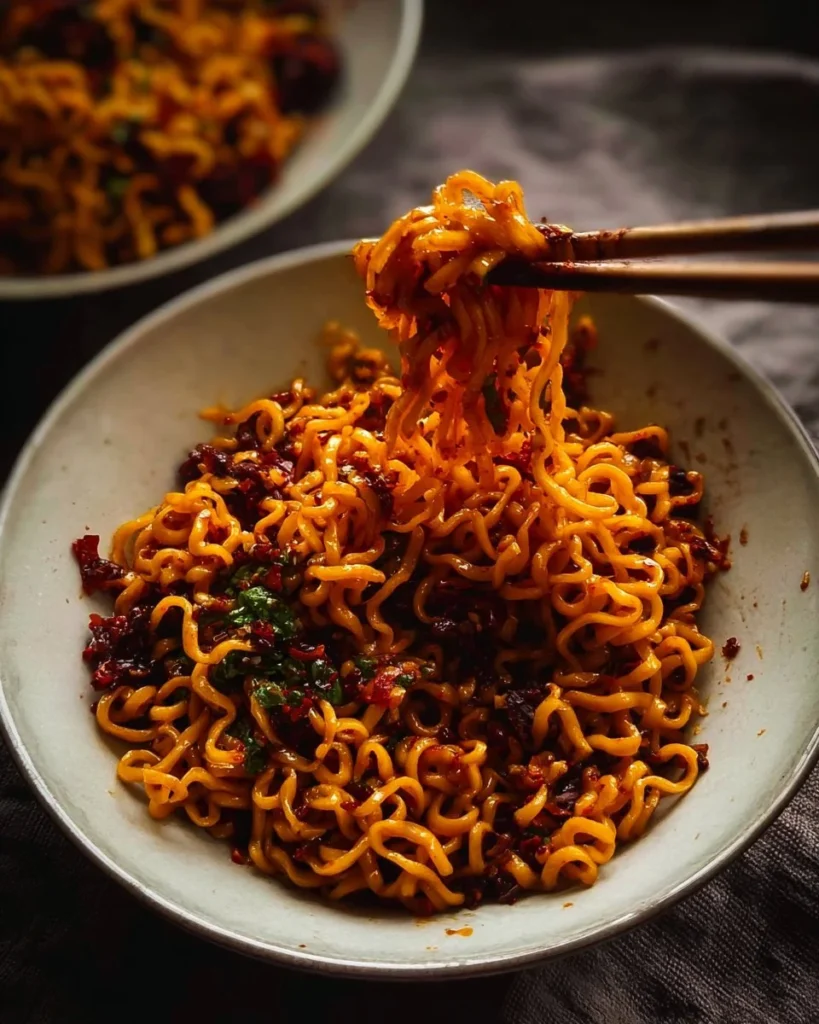
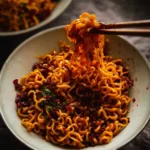
342 calories a serving, the lightest in this group, with 11 grams of protein, the least on this page. Twelve ingredients, the most in this group, built on Chinese sesame paste with chili crisp, ginger and cilantro over instant ramen cakes. View the full recipe — 25 minutes, serves 2, 342 calories
Vegetable Lo Mein Noodles
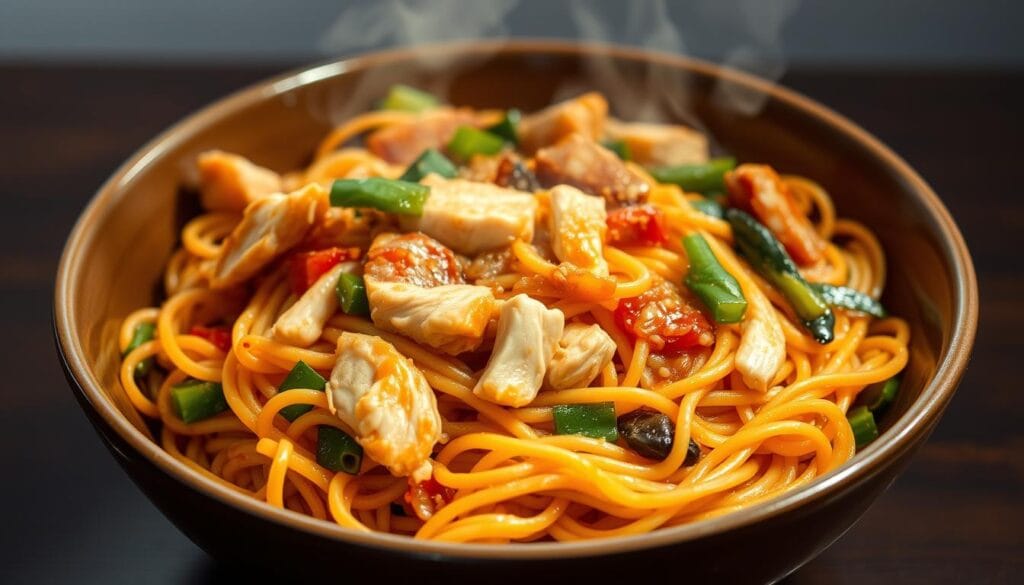
Fifteen minutes, the quickest recipe on this page, across three servings, the most portions in this group. Soy, oyster sauce, sesame oil and sugar over lo mein noodles with bell pepper, carrot and mushroom. View the full recipe — 15 minutes, serves 3, 371 calories
Soy Sauce Chow Mein Noodles
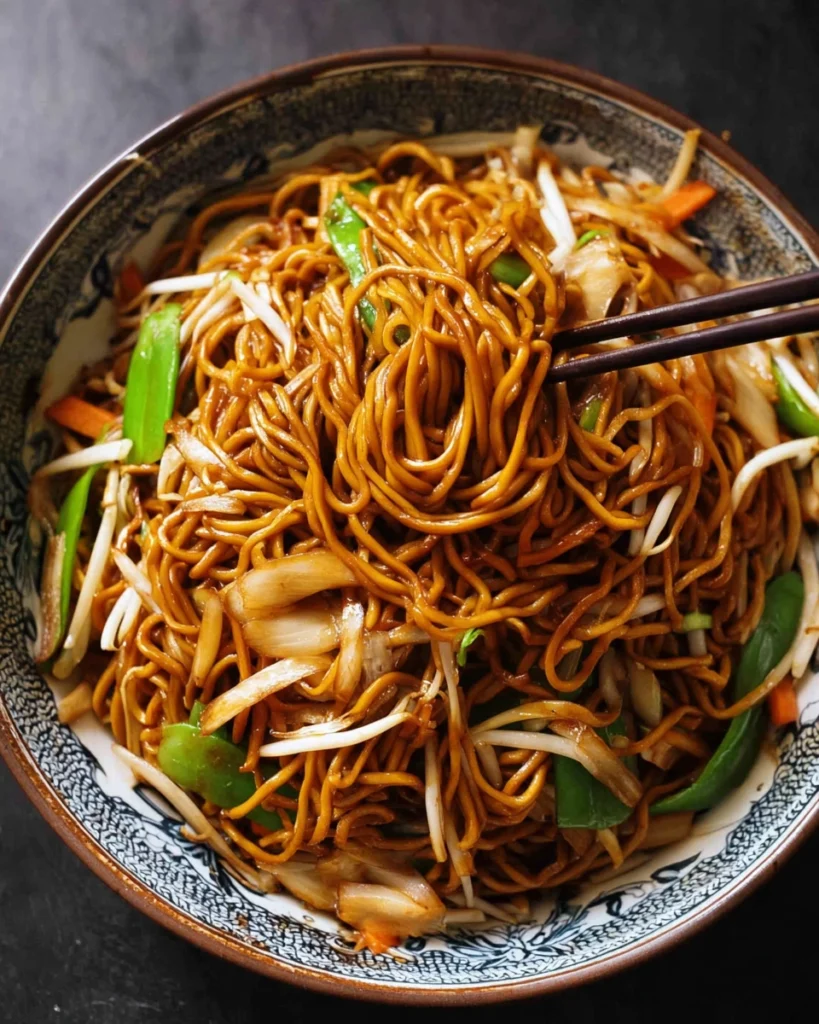
Both light and dark soy sauce with oyster sauce over fresh chow mein noodles, in twenty five minutes, tied for the longest in this group. The two soy sauces are doing separate jobs and this dish does not work with only one. View the full recipe — 25 minutes, serves 2, 531 calories
Garlic Chili Oil Noodles
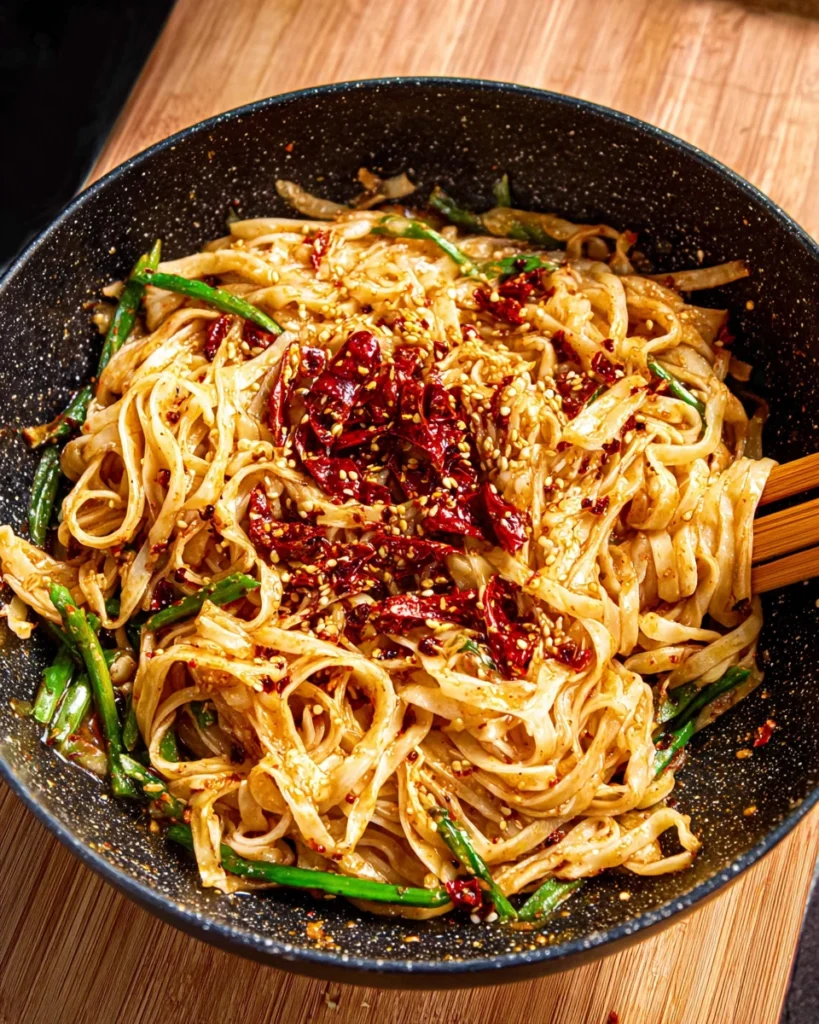
595 calories a serving, the heaviest in this group, from three tablespoons of chili oil, with only eight ingredients, the fewest here. Four cloves of garlic and two tablespoons of shallot over wide rice noodles in twenty minutes. View the full recipe — 20 minutes, serves 2, 595 calories
Ground Beef
Three using a pound of ground beef, all serving four. Two are Asian in style and the third is the American beef and noodles that uses a can of soup.
Mongolian Ground Beef Noodles

Nine ingredients, the fewest in this group, at 548 calories a serving, the lightest here, in twenty five minutes, the quickest in this group. A third of a cup of brown sugar against a quarter cup of soy sauce and five cloves of garlic, over spaghetti. View the full recipe — 25 minutes, serves 4, 548 calories
Caramelized Onion Beef and Noodles

Sixty minutes, the longest in this group, and most of it is one large onion cooking down properly. A can of condensed onion soup plus two cups of broth over egg noodles, finished with Parmesan, which makes this the least Asian dish on the page. View the full recipe — 60 minutes, serves 4, 578 calories
Spicy Garlic Beef Noodles
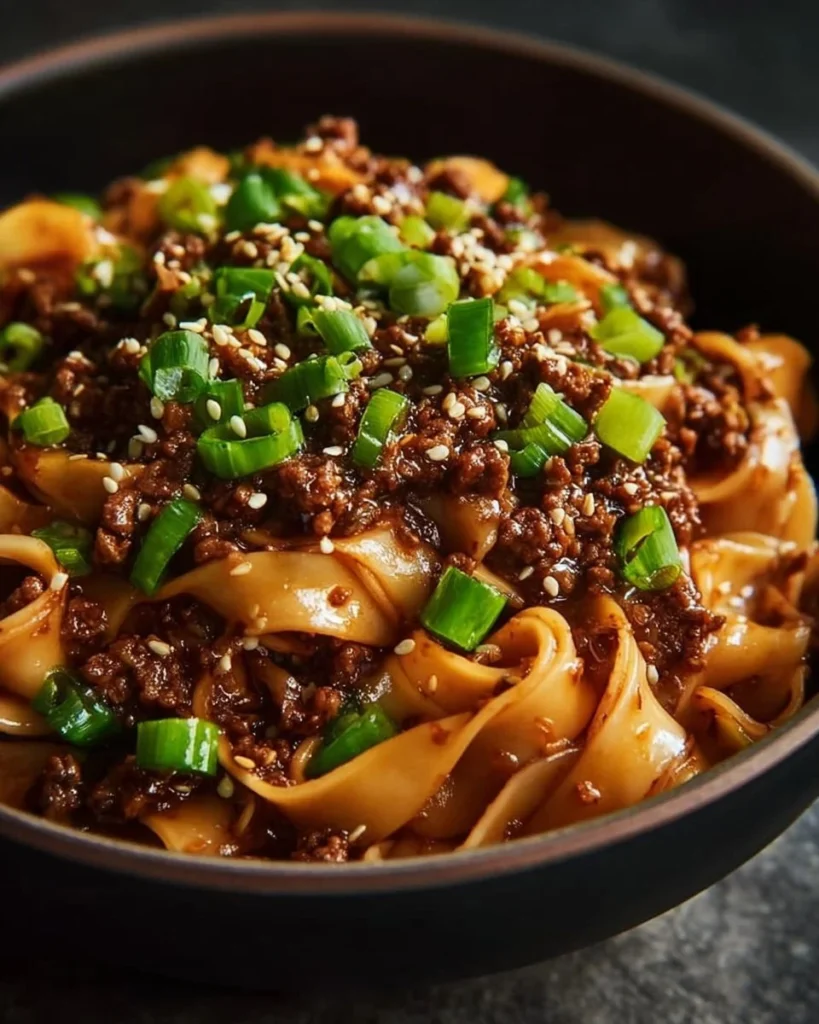
Thirteen ingredients, the most in this group, at 582 calories a serving, the heaviest here. Five cloves of garlic with hoisin, chili garlic sauce, rice vinegar and sesame oil over ten ounces of wide rice noodles. View the full recipe — 30 minutes, serves 4, 582 calories
Chicken, Pork and Salmon
Six with a named protein, and the widest calorie range of any group here: 339 to 863 a serving. Three of the six are done in twenty five minutes.
Chicken Vegetable Ramen Noodles
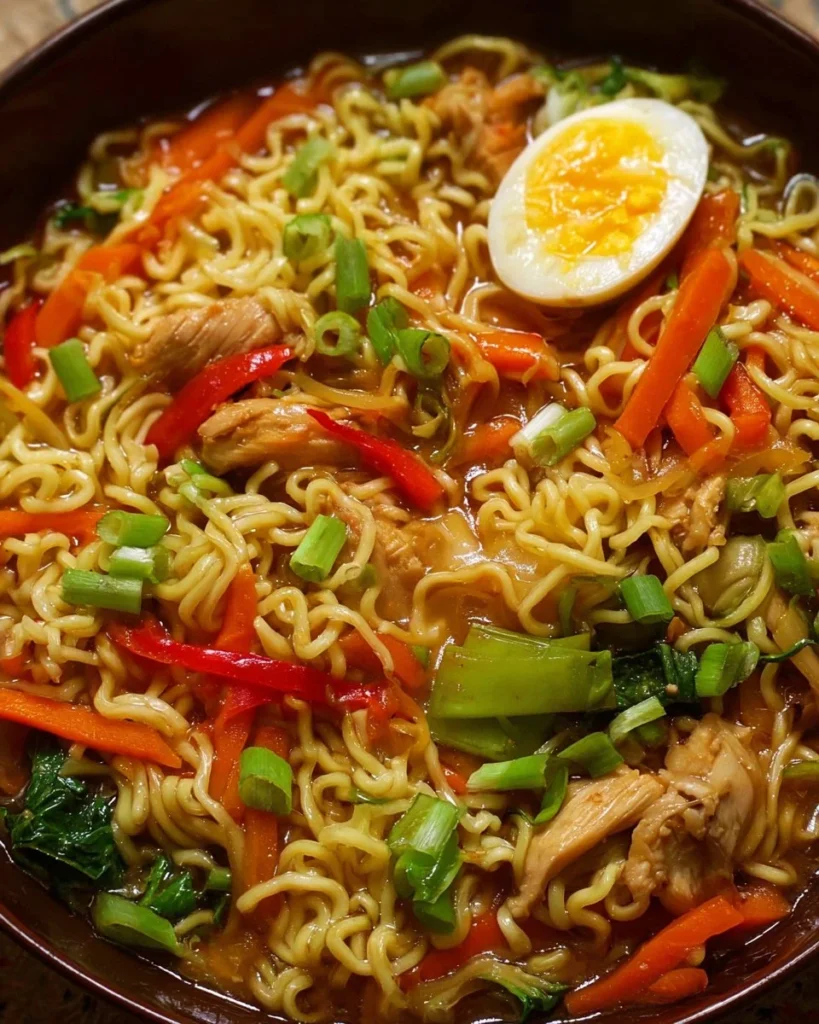
339 calories a serving, the lightest recipe on this page, with fourteen ingredients, tied for the most in this group. Seven ounces of thigh with carrot, bell pepper and two cups of cabbage, and only a cup and a quarter of water, so this is a stir fry rather than a soup. View the full recipe — 25 minutes, serves 2, 339 calories
Sesame Chili Dan Dan Noodles

22 grams of protein, the least in this group, from a half pound of ground pork over Chinese wheat noodles. Two tablespoons of sesame paste with chili oil, dark soy and crushed peanuts, in twenty five minutes, tied for the quickest in this group. View the full recipe — 25 minutes, serves 4, 429 calories
Teriyaki Salmon Noodles with Chinese Broccoli
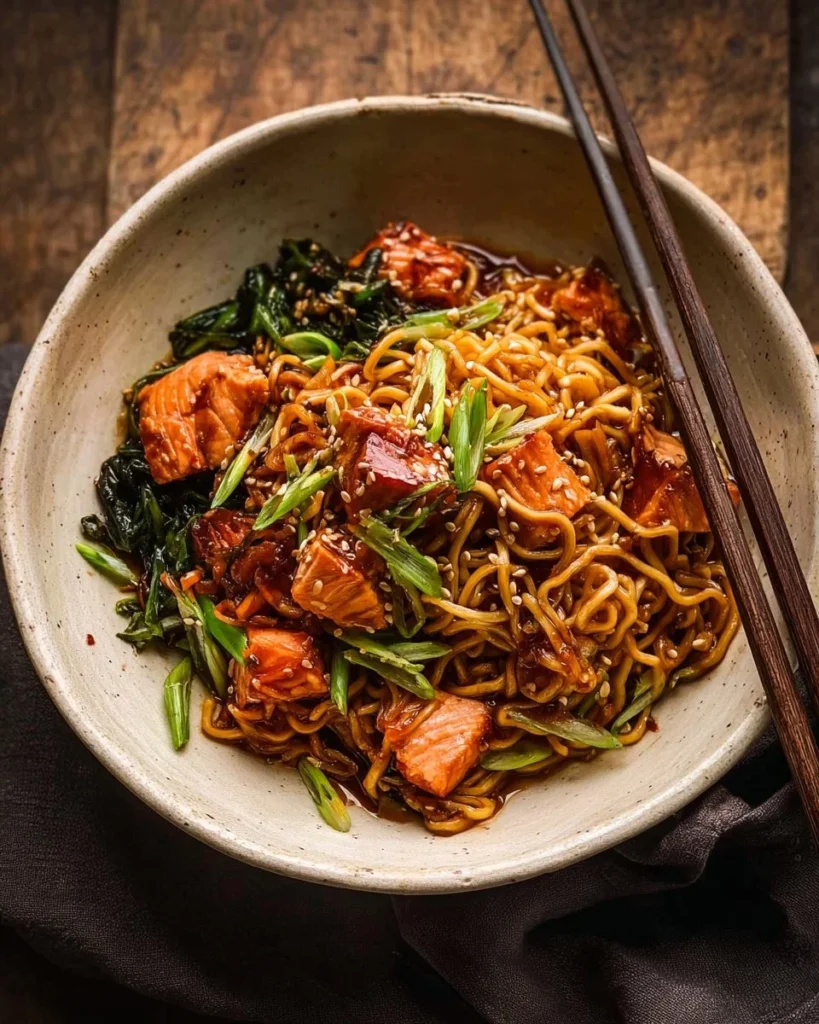
Eight ounces of skinless salmon with a teriyaki built from soy, mirin and cooking sake rather than bottled sauce, plus a bunch of Chinese broccoli over two ramen cakes. Thirty minutes, tied for the longest in this group. View the full recipe — 30 minutes, serves 2, 473 calories
Honey Teriyaki Chicken Noodles

Eight ingredients, the fewest in this group, with a pound of chicken, two cups of mixed vegetables, a half cup of soy sauce and a quarter cup of honey over spaghetti or udon. Thirty minutes, tied for the longest in this group. View the full recipe — 30 minutes, serves 4, 555 calories
Parmesan Chicken Buttered Noodles
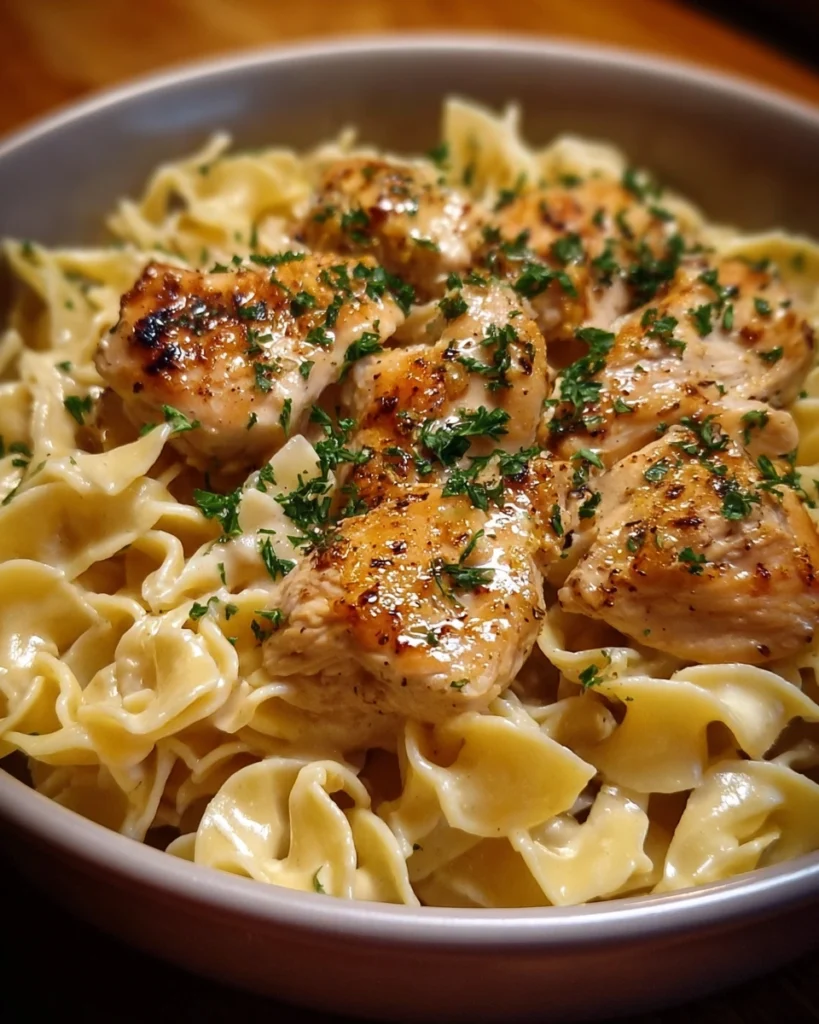
61 grams of protein, the most on this page, from four whole chicken breasts over twelve ounces of egg noodles with butter and Parmesan. Thirty minutes, tied for the longest in this group, and this is buttered noodles rather than anything Asian. View the full recipe — 30 minutes, serves 4, 776 calories
Thai Drunken Noodles with Chicken and Basil

863 calories a serving, the heaviest recipe on this page, across two servings. Fourteen ingredients, tied for the most in this group, including two Thai chilies, fish sauce and a full cup of Thai basil, in twenty five minutes, tied for the quickest in this group. View the full recipe — 25 minutes, serves 2, 863 calories
The Long Ones
Four that need an hour or more, three of them because a tough cut of beef or a real stock is involved. These are the only recipes here you cannot start after work and eat straight away.
Homemade Chicken Noodle Soup with Sherry and Egg Noodles
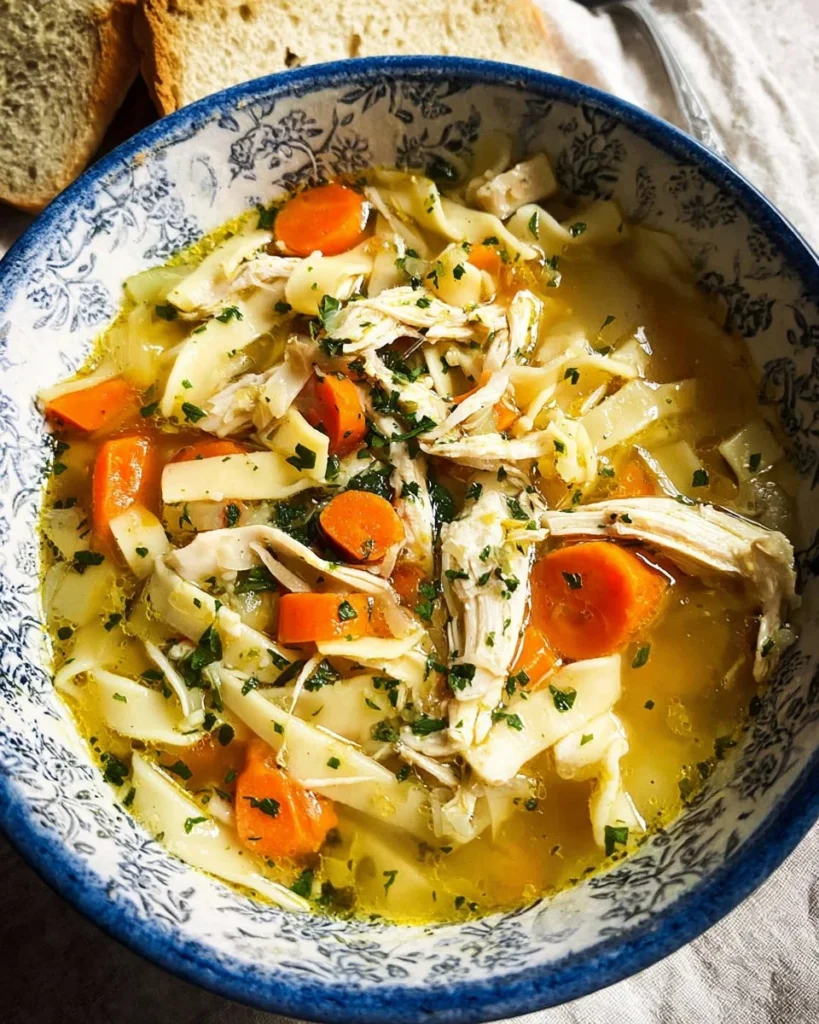
421 calories a serving, the lightest in this group, in seventy minutes, the quickest here. Seventeen ingredients including a half cup of dry sherry, three bay leaves and a half teaspoon of nutmeg, with eight ounces of egg noodles going into eight cups of broth. View the full recipe — 70 minutes, serves 6, 421 calories
Japchae Korean Noodles with Beef and Vegetables

Eighteen ingredients, the longest list on this page, over eighty minutes, with sweet potato starch noodles rather than wheat. Each vegetable is cooked separately before everything is combined, which is why the ingredient count and the time are both high. View the full recipe — 80 minutes, serves 4, 540 calories
Korean Beef Noodles
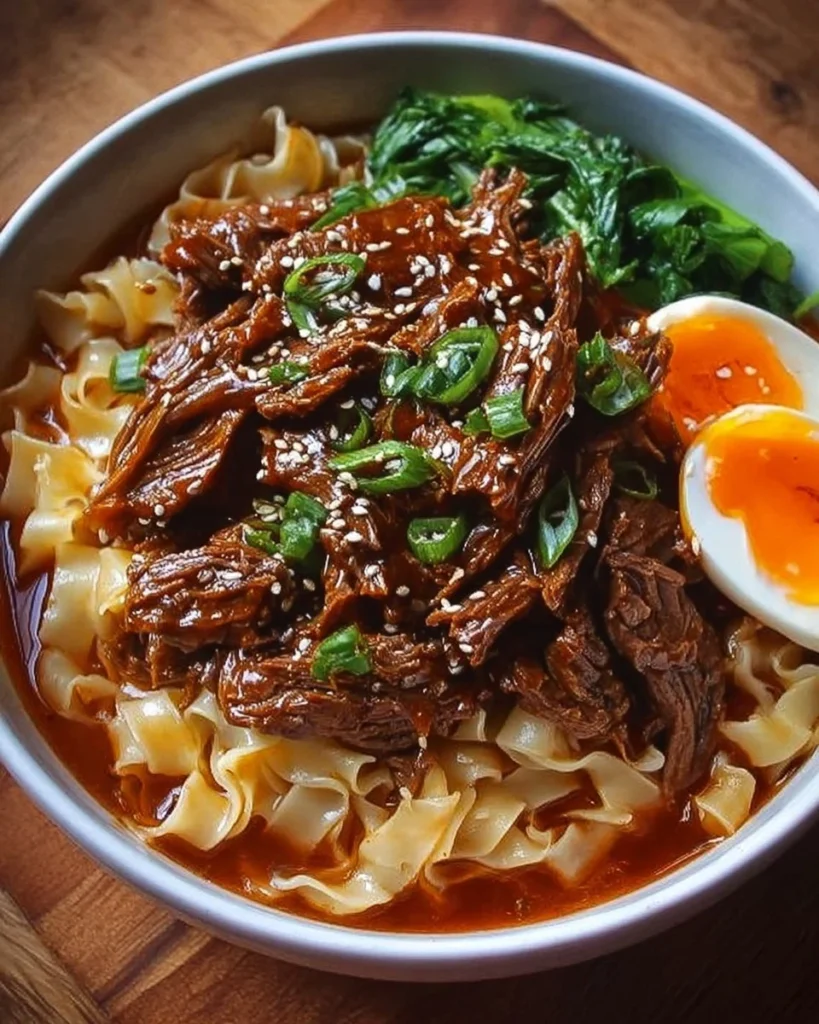
Two hours fifteen for a pound of brisket or chuck in four cups of broth with a tablespoon of gochujang, served over udon or ramen. The long cook is the beef, not the noodles, which go in at the end. View the full recipe — 135 minutes, serves 4, 552 calories
Slow Cooker Beef Egg Noodles
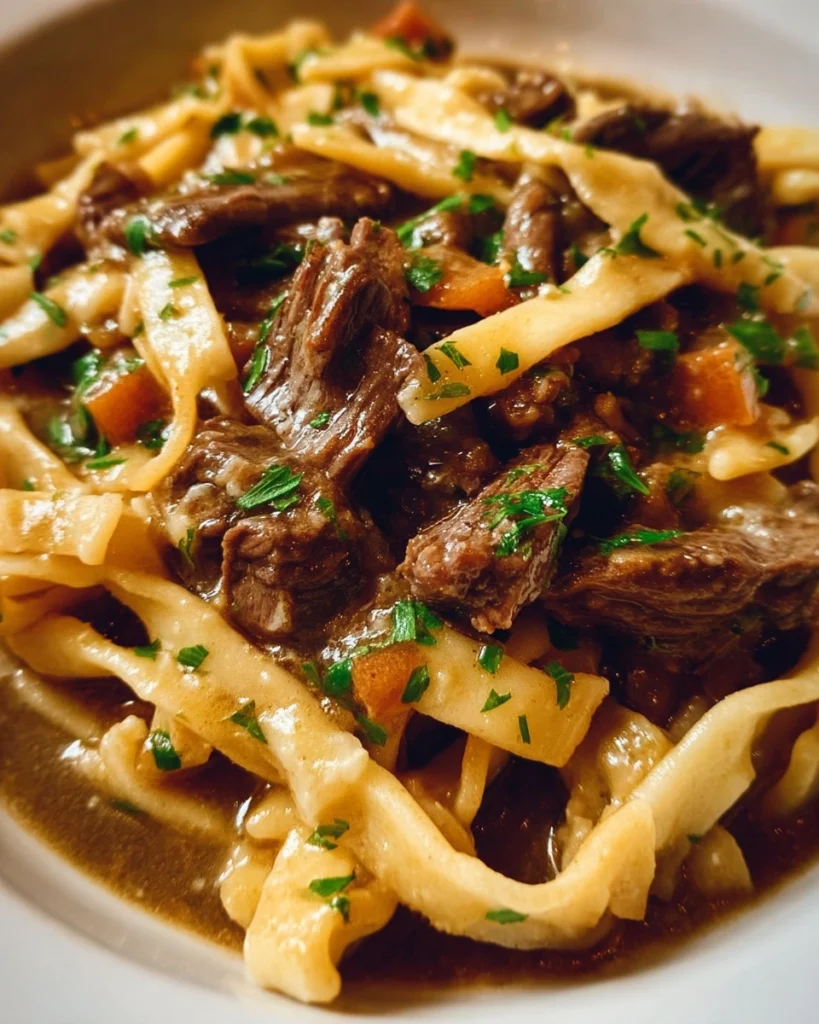
677 calories a serving, the heaviest in this group, over eight hours twenty, the longest recipe on this page. Two pounds of chuck roast with a half cup each of heavy cream and sour cream, and ten ingredients, the fewest in this group. View the full recipe — 500 minutes, serves 6, 677 calories
Before You Choose Your Recipe
Five different kinds of noodle appear on this page and each one wants something different. Wheat noodles, which covers lo mein, chow mein, udon, spaghetti and Chinese wheat noodles, boil like pasta but should come out a minute short, because they will keep cooking in a hot wok or a bowl of sauce. Rinse them under cold water if they are going into a stir fry, which washes off the surface starch that makes them clump; do not rinse them if they are going into a sauce you want to cling. Rice noodles, which three recipes here use, should be soaked in hot water off the heat rather than boiled. Boiling wide rice noodles for pad kee mao is the fastest way to ruin the dish: they should come out of the water still slightly firm and finish in the pan. Sweet potato starch noodles for japchae are the opposite and need a genuine six to eight minute boil, then a rinse, and they should be dressed while hot because they go on absorbing sauce as they sit. Instant ramen cakes, used in three recipes here without their seasoning packet, are precooked and fried, so they need about two minutes and nothing more. Egg noodles are the softest of the lot and overcook in moments. The second thing is the soy sauce. Four recipes on this page call for both light and dark soy sauce, and they are not the same product. Light soy is the salt; dark soy is thicker, slightly sweet from molasses and used mostly for colour. Substituting one for the other gives you either a pale dish or an oversalted one. Chinese sesame paste is likewise not tahini, since it is made from toasted seeds and is darker and more bitter. Finally, a hot pan and small batches. A crowded pan steams the noodles instead of frying them, and the browning you lose is most of the reason to stir fry in the first place. Cook in two batches if your pan is not large.
Noodle Questions, Answered
Can I substitute one kind of noodle for another?
Within a family, usually yes: udon for spaghetti, lo mein for chow mein. Across families, rarely. Rice noodles, wheat noodles and sweet potato starch noodles have different textures and completely different cooking methods, and swapping them changes the dish rather than adapting it. If a recipe specifies wide rice noodles, use wide rice noodles.
Why do my rice noodles turn to mush?
Because they were boiled. Rice noodles should be soaked in hot water off the heat until pliable but still firm, then finished in the pan with the sauce. They have no gluten to hold structure, so once they are fully soft in water they have nowhere left to go but apart.
What is the difference between light and dark soy sauce?
Light soy sauce is thin and salty and does the seasoning. Dark soy sauce is thicker, less salty, slightly sweet from added molasses, and is there mainly for colour and depth. Four recipes on this page use both, and using only one gives you a dish that is either pale or too salty.
Should I rinse noodles after cooking?
It depends where they are going. Rinse them if they are going into a stir fry, since cold water stops the cooking and washes off surface starch that would otherwise glue them together. Do not rinse them if they are going into a sauce that needs to cling, because that starch is what helps it grip.
Can I use instant ramen noodles in a real recipe?
Yes, and three recipes here do. Discard the seasoning packet and use the noodle cake on its own. They are precooked and flash fried, so they need about two minutes in water and they have a springiness that suits a saucy dish. They are a legitimate noodle, not a shortcut.
Is Chinese sesame paste the same as tahini?
No. Chinese sesame paste is made from toasted sesame seeds and is dark, nutty and slightly bitter. Tahini is made from raw or lightly toasted seeds and is pale and much milder. In a dan dan or sesame noodle sauce the difference is obvious, and tahini will taste thin by comparison.
When do noodles go into a soup?
At the end, in the last few minutes, or cooked separately and added to the bowl. Noodles left sitting in broth keep swelling and absorb a surprising amount of it, so a soup that was perfect at dinner is a bowl of bloated noodles the next day. For leftovers, store the noodles and the broth separately.
Why are my stir fried noodles soggy instead of browned?
The pan was too crowded or not hot enough, which amounts to the same thing. Once the pan temperature drops the moisture coming off the noodles and vegetables cannot evaporate, so everything steams. Use the largest pan you have, get it properly hot, and cook in two batches if you need to.
More Noodle and Pasta Dinners
Where the noodles lead next.
- Asian Recipes — The wider category most of these sit in.
- Pasta Recipes — The Italian side of the same idea.
- Chicken Noodle Soup Recipes — Noodles in broth, thirteen ways.
- Fried Rice Recipes — Same wok, different starch.
Browse all of our recipe collections.