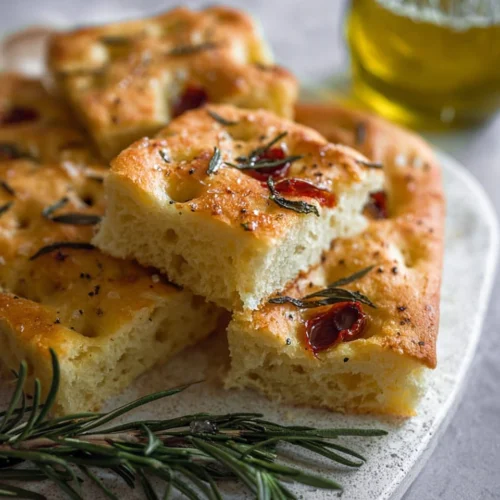
Rosemary olive oil focaccia is a soft, dimpled flatbread made from a wet yeast dough, baked in a pan coated with olive oil, and topped with fresh rosemary and coarse sea salt. It takes ten minutes of hands on work, rests for a long rise, bakes in twenty two minutes, and cuts into eight squares.
The dough is mixed with a spoon and needs only light kneading, and a rest in the refrigerator is optional but adds flavor. Olive oil in the pan fries the bottom into a golden crust, while the dimples catch pools of oil and herbs that turn the top fragrant. The crumb stays airy and chewy, ideal for sandwiches or dipping.
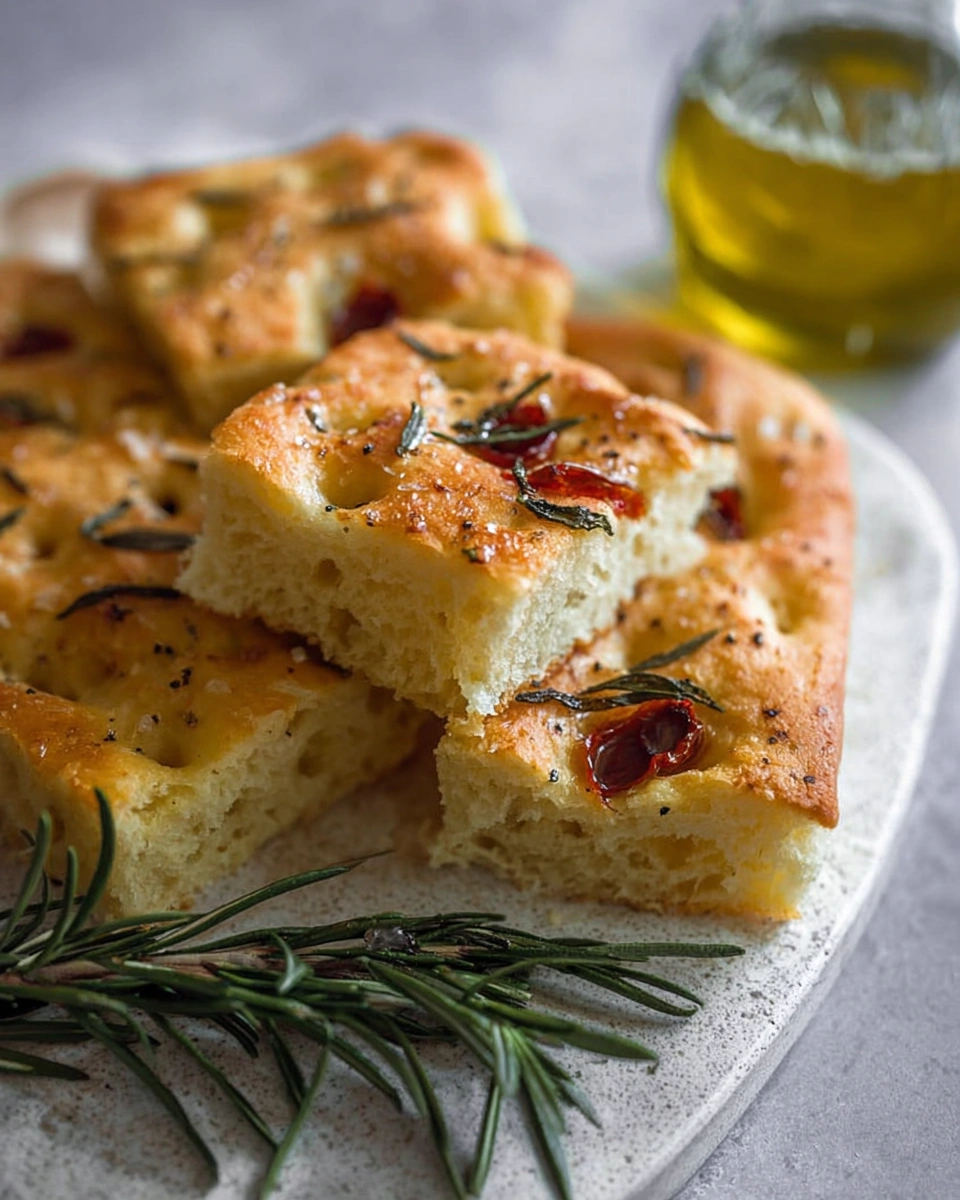
Table of Contents
What Makes Rosemary Olive Oil Focaccia Work
A wet dough makes an open, airy crumb.
Olive oil crisps the bottom and flavors the top.
Rosemary and salt are all the topping needed.
Ingredients for Rosemary Olive Oil Focaccia
- The dough is four cups of all purpose flour, two teaspoons of fine sea salt, one and a half cups of warm water, and two teaspoons of instant yeast.
- The finish is a quarter cup of extra virgin olive oil, two tablespoons of chopped fresh rosemary, and one teaspoon of coarse sea salt for sprinkling.
Flour. It builds the chewy structure.
Warm water. It wakes the yeast and makes the dough wet.
Olive oil. It crisps the crust and adds flavor.
Rosemary. It gives a piney, fragrant top.
Coarse salt. It adds crunch and seasoning.
Baking Rosemary Olive Oil Focaccia Step by Step
1. Mix the dough. Stir the flour, fine salt, and yeast in a large bowl, then add the warm water and mix until a shaggy dough forms.
2. Knead and rise. Knead gently for five minutes, place in an oiled bowl, cover, and let rise for about an hour until doubled.
3. Shape. Pour half the oil into a baking pan, add the dough, turn it to coat, and stretch it to the corners.
4. Dimple and top. Rest the dough for twenty minutes, press your fingertips deep into it, then drizzle with the remaining oil and scatter on the rosemary and coarse salt.
5. Bake. Heat the oven to 425 degrees F and bake for twenty to twenty five minutes until golden brown.
Use a wet dough and resist adding extra flour. It should feel sticky and loose, which makes the airy holes inside the bread. Oil your hands instead of flouring them when you handle it, and stretch the dough gently rather than pressing out the gas that the yeast has made.
Dimple the dough firmly, down to the pan. Shallow dimples spring back and the bread bakes up smooth, while deep ones hold pools of oil and keep the signature look. Wet your fingertips with oil if the dough sticks, and make the holes close together across the whole surface.
Making Rosemary Olive Oil Focaccia Ahead
Cool the focaccia on a rack, then store it wrapped at room temperature for up to two days, or freeze for up to three months. Warm slices in a 350 degree oven for ten minutes to restore the crust. You can also refrigerate the dough overnight after the first rise, and bake it the next day for deeper flavor.
How to Serve Rosemary Olive Oil Focaccia
Serve squares warm with olive oil and balsamic vinegar for dipping, split them for sandwiches, or tear them beside soup. For more breads, try homemade puffed pita bread, skillet garlic naan bread, buttery yeast dinner rolls, or homemade crusty bread loaves.
Tips and Variations for Rosemary Olive Oil Focaccia
Flag the allergens. This bread contains wheat, and the oil and herbs may be processed with other allergens, so check every label.
Do not taste raw dough. Do not taste the raw dough, since it contains raw flour, and wash your hands and tools after mixing.
Check the doneness. The top should be deep golden and the bottom crisp.
Use good oil. Its flavor shows.
Add toppings. Olives or tomatoes work well.
Use a metal pan. It browns the bottom well.
Rest before slicing. It sets the crumb.
Check trusted guidance. Read the University of Wisconsin Extension leftovers guidance for safe storage of baked bread.
For a garlic version, add thinly sliced garlic to the oil before baking, and for a cheese one, sprinkle grated Parmesan on top for the last five minutes. Cherry tomatoes pressed into the dimples soften into sweet pockets. Each topping bakes in the same time as the plain loaf.
If you prefer a thicker focaccia, use a smaller pan and bake a few minutes longer. A thinner one in a large sheet pan bakes faster and gets crisper. Use active dry yeast if you have no instant, and stir it into the warm water first for five minutes until it turns foamy.
Common Questions About Rosemary Olive Oil Focaccia
Why is my rosemary olive oil focaccia dense?
The dough was too dry or did not rise long enough.
Can you make rosemary olive oil focaccia ahead of time?
Yes. Refrigerate the dough overnight.
Can you freeze rosemary olive oil focaccia?
Yes, for up to three months.
Can I use bread flour?
Yes. It makes a chewier crumb.
Do I need to use dried rosemary?
Fresh is better, but dried works in a smaller amount.
Rosemary Olive Oil Focaccia
Equipment
- Baking pan
- Large bowl
- Spoon
Ingredients
Main Ingredients
- 4 cup all purpose flour
- 2 tsp fine sea salt
- 1 cup warm water plus 1/2 cup more
- 2 tsp instant yeast
- ¼ cup extra virgin olive oil
- 2 tbsp fresh rosemary chopped
- 1 tsp coarse sea salt
Instructions
Cooking
- Mix. Mix the flour, salt, yeast, and water.
- Rise. Knead briefly and let rise 1 hour.
- Pan. Stretch the dough in an oiled pan.
- Top. Dimple, add oil, rosemary, and salt.
- Bake. Bake at 425 F for 20 to 25 minutes.